Construction Bans in Water Protection Zones and Shorelines in Russia
Construction inside a shoreline strip in Russia is barred for capital structures and access-blocking fences—with standard public shoreline width set at 20 meters and five meters for small rivers and canals—while environmental and public-access rules take precedence over registered land title and allow claims without a statute of limitations for ongoing obstructions. A May 2026 Supreme Court of the Russian Federation ruling reinforced that prior cadastral registration or a state real estate register extract does not legalize unauthorized structures or fences restricting free public access to water bodies, exposing commercial hospitality, leisure, and infrastructure assets to demolition at the owner's expense. This guide examines the May 2026 Supreme Court position, statutory shoreline and land rules, development and cross-border compliance risks, and land due diligence procedures.
Read

Hague Service Convention 1965: Cross-Border Service of Process in Civil and Commercial Disputes
Cross-border service of process under the Hague Service Convention of November 15, 1965 typically takes six to 12 months—requiring courts to schedule hearings with a buffer of at least six to eight months—and prevents defective notice that can overturn judgments or block foreign recognition and enforcement. In Russia, the Ministry of Justice acts as the designated Central Authority under the treaty, which entered into force for the Russian Federation on December 1, 2001 following its February 12, 2001 accession statute, and bars direct postal or courier service under Russia's reservation excluding Article 10. This guide explains the treaty's historical shift away from diplomatic channels, covered civil and commercial matters, four-step Central Authority mechanics, translation and postal rules, key jurisdiction reservations, and risk-mitigation steps for cross-border litigation.
Read
1961 Hague Apostille Convention: Cross-Border Document Legalization
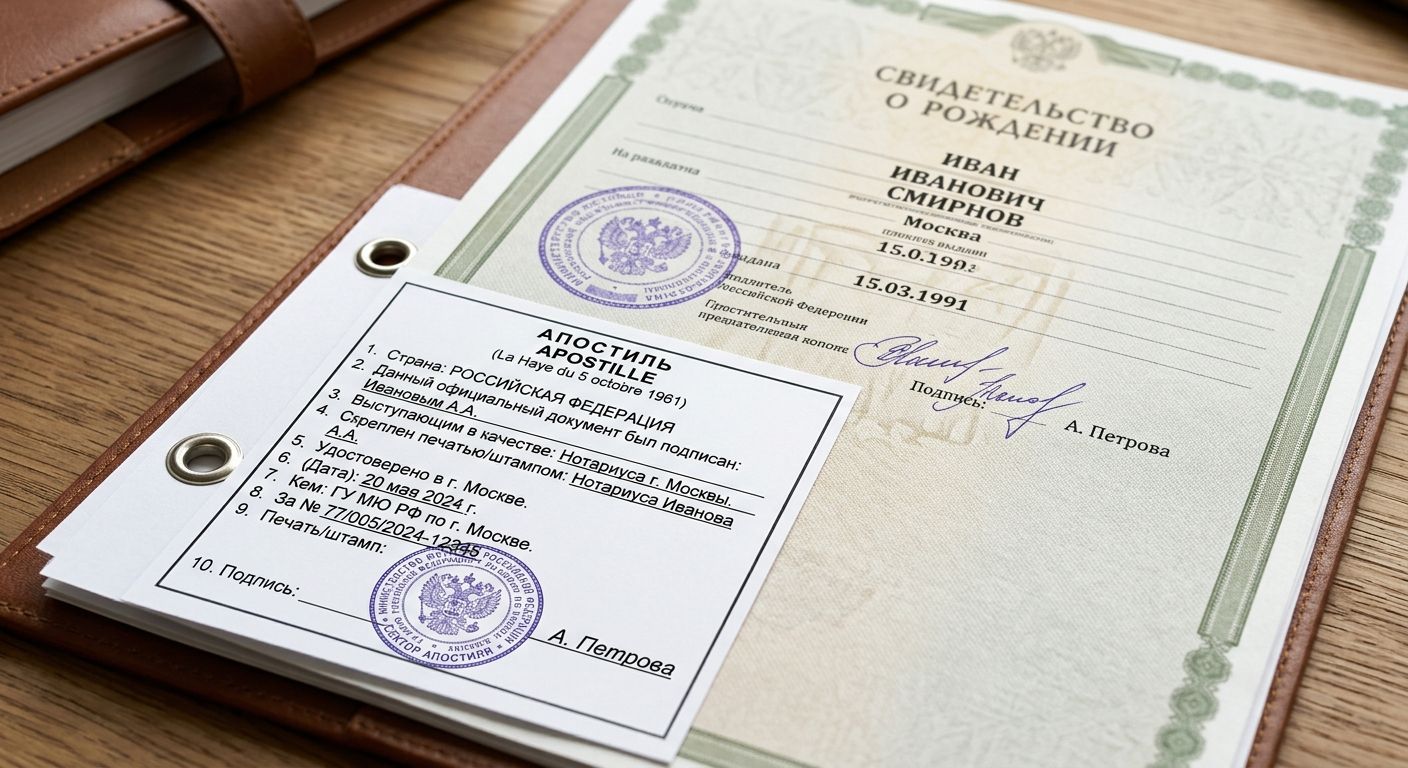
Apostille certification under the 1961 Hague Apostille Convention replaces multi-step consular legalization with a single-window stamp—carrying a statutory fee of 2,500 rubles per document in Russia and applying in over 120 contracting states, including Russia since May 31, 1992 and mainland China since November 7, 2023. For international businesses, investors, and executives navigating cross-border corporate filings, bank account opening, or arbitration, properly authenticated official records avoid rejected filings, repeated legalization costs, and Know Your Customer or sanctions compliance delays. This guide explains apostille versus consular legalization, eligible and excluded documents, stamp structure, validity rules, treaty geography and objections, and practical legalization workflows.
Read
Cross-Border Payment Compliance Checklist for Companies
Pre-payment compliance screening can filter out up to 90% of cross-border settlement risks before a transfer is initiated, helping companies avoid frozen correspondent funds, three-to-six-week payment returns with intermediary fee deductions, and currency control or anti-money laundering disputes in Russia. In 2026, secondary compliance screening by foreign banks and payment institutions—driven by sanctions and counter-sanctions exposure, Know Your Customer and anti-money laundering controls, and currency regulation—affects settlements even with China, the United Arab Emirates, Türkiye, the Commonwealth of Independent States, and Southeast Asia. This guide sets out a five-step pre-payment compliance checklist, compares settlement mechanisms and risk profiles, identifies recurring operational failures, and answers common cross-border payment questions.
Read
Moving Large Capital Abroad from Russia: Routes, Compliance, and Risk Controls
Moving substantial private or corporate capital out of Russia requires tailored payment routing and pre-transaction legal files—with timelines ranging from minutes to 24 hours via digital asset channels or three to 15 business days and longer via banking and investment routes—because the primary compliance bottleneck sits with foreign correspondent and receiving banks rather than basic domestic transfer rules. Foreign financial institutions evaluate large transfers through three-to-five-year source-of-funds and source-of-wealth documentation alongside sanctions screening across ultimate beneficial owners, executives, banks, and logistics hubs, while domestic currency control, counter-sanctions, and anti-money laundering rules govern the Russian side. This guide examines four capital transfer routes, compares their timelines, costs, and compliance profiles, outlines key regulatory questions, and details risk controls for cross-border capital movements.
Read
How to Open a Bank Account in Hong Kong for Foreign Companies
Opening a bank account in Hong Kong typically takes from one to three weeks through payment platforms, three to five weeks via virtual banks, or six to ten weeks at traditional banks, with minimum balance requirements ranging from zero to $50,000 depending on the institution. While Hong Kong remains a central trade and settlement hub for the Asia-Pacific region—supporting transactions in Chinese yuan, Hong Kong dollars, and United Arab Emirates dirhams—regulatory oversight by the Hong Kong Monetary Authority and banking compliance teams enforces strict enhanced due diligence on cross-border ownership structures, commercial substance, and fund provenance. This guide sets out a six-step account opening workflow for foreign companies, compares Hong Kong financial institutions, identifies common compliance failure points, and answers core operational and tax questions.
Read
What to Do If a Bank Suspends Account Operations in Russia
When a bank suspends account operations or restricts remote banking access, responding within the statutory review window—where banks generally have up to seven business days to assess submitted explanations and central bank interdepartmental reviews take up to 20 business days—is essential to prevent account termination or high-risk classification. Financial institutions enforce anti-money laundering and counter-terrorist financing rules alongside central bank risk-scoring algorithms and automated client-risk platform checks, making accurate classification of the restriction the first step. This guide sets out a five-step response workflow, highlights actions that worsen compliance exposure, compares escalation channels, and answers core operational questions.
Read
E-Commerce Operations Between China and International Markets: Tax, Customs, Payment Compliance, and Dispute Protection
Cross-border e-commerce between China and international markets requires full customs declarations, jurisdiction-specific product compliance and labeling, and verifiable payment chains—where structured tax and customs planning preserves input tax recovery and prevents cargo holds, while informal shipping routes and unverified payment intermediaries expose foreign sellers and brands to inventory seizures, account freezes, and regulatory penalties. As online marketplaces and customs authorities tighten enforcement around cross-border trade, manufacturers, brand owners, and sellers moving goods from China into target jurisdictions face scrutiny over customs valuation, origin and product safety rules, cross-border fund repatriation, and marketplace enforcement. This guide sets out the core operating principles for China-to-international-market e-commerce, compares operating models, and addresses key customs, tax, payment, and marketplace dispute questions.
Read
How Foreign Companies Without a Russian Registration Can Enforce Rights in Russian Courts
Foreign companies without a branch, representative office, or local tax registration in Russia can bring claims in Russian state commercial arbitration courts—where cases typically take three to six months compared to nine to 18 months in international commercial arbitration—and may seek interim asset freezes before or alongside a lawsuit. Under Russian commercial procedural law and supreme court practice, foreign entities hold equal procedural standing regardless of jurisdiction, enabling debt recovery, intellectual property enforcement, customs disputes, and claims against digital platforms across domestic and cross-border transactions. This guide outlines core procedural documents, compares dispute forums, examines typical claim scenarios and court outcomes, and answers key litigation questions.
Read
Enforcing Foreign Arbitral Awards in Russia in 2026: Key Precedents and Risk Strategy
Enforcing foreign arbitral awards in Russia in 2026 requires navigating strict public-policy scrutiny, anti-suit and sanctions-jurisdiction rules under Russian commercial procedural law—where court enforcement proceedings commonly run several months and award applications are generally subject to a three-year limitation window—alongside practical payment and evidentiary hurdles. Awards rendered by institutions such as the International Chamber of Commerce, the London Court of International Arbitration, the Stockholm Chamber of Commerce, the Singapore International Arbitration Centre, or the Hong Kong International Arbitration Centre face sharply different outcomes depending on jurisdiction, sanctions exposure, due process, and damages mechanics. This guide examines recent judicial precedents, compares arbitral jurisdictions by refusal risk, outlines practical contract and litigation steps, and answers core enforcement questions.
Read
Commercial Risk vs Force Majeure in Supply Contracts: Legal Criteria and Risk Strategy
Distinguishing commercial risk from force majeure in supply contracts determines whether a supplier can avoid penalties, contract termination, and blacklisting from public procurement registries—where commercial risks such as price spikes, currency shifts, or routine logistics delays generally do not excuse non-performance, while true force majeure requires both extraordinary and unavoidable events occurring after contract execution. Under Russian civil law and current judicial practice, misclassifying a supply disruption exposes businesses to liquidated damages, unilateral contract termination, administrative or procurement blacklisting, and unrecoverable losses across cross-border and domestic transactions. This guide explains the legal boundary between commercial risk and force majeure, sets out practical qualification criteria, compares common supply scenarios, and answers core compliance questions.
Read
Seven Legal Criteria for Establishing Force Majeure in Supply Contracts
Establishing force majeure in supply contracts requires meeting seven cumulative legal criteria—where failing even one element can expose a supplier to liquidated damages, unilateral termination, and inclusion on public procurement blacklists—while routine price spikes, currency swings, and counterparty delays generally remain commercial risk. Under Russian civil law, antitrust enforcement practice, and commercial court rulings, parties cannot rely on general references to market instability or external tensions without documented proof of objective impossibility and causal impact. This guide sets out the seven qualification criteria, compares commercial risk against force majeure, reviews judicial case outcomes, provides a five-step action sequence, and answers key questions.
Read