Support in dispute resolution
We provide full support for disputes - from strategy development and preparation of documents to representation in court and enforcement of the decision. KDpartners specialists work at all stages and coordinate the turnkey dispute resolution process.
Disputes over debt recovery
Disputes over debt recovery from legal entities encompass pre-trial negotiations, legal proceedings, and enforcement proceedings. KDpartners specialists support all stages of disputes in Russia and abroad.
In this category 1 service(s)
Jurisdiction Russia
International commercial disputes
International commercial disputes require consideration of jurisdiction, applicable law and the mechanism for executing decisions. KDpartners specialists provide comprehensive support for arbitrations and court proceedings involving foreign counterparties.
Jurisdiction Russia
Contractual disputes
Contractual disputes include conflicts during the conclusion, execution or termination of a contract, as well as the collection of debts and damages. KDpartners specialists are ready to help you at any stage of a dispute in Russia or abroad.
In this category 3 service(s)
Jurisdiction Russia
Disputes over license agreements
Disputes over license agreements often involve non-payment of royalties, exceeding the scope of authorized use, disagreements over the license term, or invalidation of the contract. The experts at KDpartners represent the interests of rights holders and licensees in commercial disputes related to intellectual property.
Jurisdiction Russia
Dispute resolution with a Russian counterparty
We provide legal support to foreign companies interested in resolving disputes with Russian counterparties. KDpartners specialists offer assistance in both Russian state courts and arbitrations, as well as at the pre-trial stage — taking into account sanction risks, jurisdictional specifics, and current legislation.
In this category 6 service(s)
Jurisdiction Russia
Contact us
Leave a request and our lawyers will contact you shortly to provide a consultation on your issue.
More about our services
- General information
- Categories of disputes
- Stages of support of disputes in state courts
- Stages of Dispute Support in Arbitration Courts
- Stages of Dispute Support in Foreign Courts
- Legal support in the framework of dispute resolution
General information
Dispute resolution is a set of legal procedures aimed at restoring violated rights or protecting legitimate interests in a conflict. Disputes can arise both between individuals and companies, and with the participation of state bodies. Effective dispute resolution requires the participation of a professional representative who is able to build a legally sound strategy and ensure compliance with procedural requirements.
Dispute support includes all stages from situation analysis and negotiations to litigation and enforcement of a court decision. An integrated approach allows you to minimize risks, reduce the time for resolving a conflict and avoid mistakes that can lead to an unfavorable outcome of the case.
Categories of disputes
Lawyers support disputes of various legal nature that require a specialized approach:
|
Category of dispute |
Views |
|
Corporate disputes |
Exclusion of a participant, challenging decisions of management bodies |
|
Contractual disputes |
Violation of the terms of contracts for work, supply, leasing, rent, agency |
|
Debt collection disputes |
Debt recovery, losses, unjust enrichment |
|
Tax disputes |
Challenging additional tax charges, acts of inspections, penalties |
|
Disputes with state authorities |
Appeal against decisions, actions or inaction of state bodies |
|
Administrative disputes |
Appeal against administrative fines, orders, resolutions |
|
Customs disputes |
Challenging customs value, classification, adjustments |
|
Intellectual Property Disputes |
Infringement of Exclusive Rights, License and Trademark Disputes |
|
International Commercial Disputes |
Disagreements on foreign trade contracts, international arbitration |
|
Labor disputes |
Dismissal, recovery of wages, disputes over disciplinary sanctions, collective labor claims |
Labor disputes and most contractual conflicts arise between parties with equal procedural status. In contrast, disputes with state authorities (including tax, administrative and customs) are regulated by the provisions of the Code of Administrative Procedure of the Russian Federation (CAP) and imply a special procedure, where one of the parties is a public authority. This requires a different procedural approach and specifics in proof. At the same time, in certain cases, the Arbitration Procedure Code of the Russian Federation is still applied.
Stages of support of disputes in state courts
Litigation support may cover one or more stages, depending on the nature of the conflict and the client's procedural situation:
1. Pre-trial settlement
Verification of circumstances, analysis of documents, formation of a legal position, preparation of claims and negotiation with the other party. At this stage, it is possible to reach an agreement without going to court.
2. Trial in the first instance
Preparation of a statement of claim or response, collection of evidence, representation in court, participation in hearings, assessment of judicial risks and prospects of the case.
3. Appeal and cassation appeal
Verification of a judicial act, analysis of the grounds for cancellation, revision, drawing up a complaint, participation in sessions of higher courts.
4. Execution of a judicial act
Obtaining a writ of execution, submitting it to bailiffs, monitoring the progress of enforcement proceedings, challenging illegal actions/inaction of bailiffs.
Alternative procedures
Representation in an arbitration court or participation in mediation procedures. Such formats are used if there is an appropriate agreement between the parties.
Stages of Dispute Support in Arbitration Courts
A feature of supporting disputes in international commercial arbitration and other arbitration courts (including ad hoc arbitration) is their non-state nature, dispute resolution is becoming a kind of service, dispute resolution there is more thorough, professional and, at the same time, expensive.
1. Determination of the Competence of the Arbitration Court (Arbitrage)
It should be noted that the competence of arbitration, unlike a state court, does not arise from the law, the parties must agree to refer the dispute to arbitration, for this purpose a prorogation (arbitration) clause in the contract or a separate arbitration agreement is used. However, some institutional arbitrations accept only certain types of disputes, for example, the ICAC at the Chamber of Commerce and Industry of the Russian Federation is an international commercial arbitration, which means that that it takes only commercial disputes that have a foreign element. (more details: link to the page about them)
2. Pre-trial settlement
Since the process of proceedings in the arbitration court is expensive, the parties are more willing to agree to a pre-trial agreement. At this stage, it is very important to correctly study the strengths and weaknesses of your position and the opponent's position, present yours in a more favorable light and present a sufficiently convincing claim (or response to the claim) so that the dispute seems more expensive for the opponent than fulfilling your demands.
3. Arbitration proceedings
The proceedings begin with the selection of the arbitrator(s) and the determination of their competence. If the arbitrators are determined and the dispute is accepted for consideration, litigation is commenced, which is conducted on the basis of the rules (or codes) established by the arbitral institution, or (in rare cases) at the choice of the parties (in the case of ad hoc). A distinctive feature is the attention to procedural terms and the procedure for providing evidence. There are fewer meetings, but they are long.
4. (Almost never) Appeal against an arbitral award in an arbitral institution
In extremely rare cases, arbitration institutions provide the opportunity to conduct a quasi-appeal against decisions, most often this is a review in one instance.
5. Enforcement of a Judicial Act: Annulment, Recognition, and Enforcement of Arbitral Awards
The arbitration does not issue a writ of execution, in order to obtain it, you need to apply to a state court, which recognizes and enforces the award (for foreign arbitral awards), or only the enforcement of the award (for domestic arbitral awards).
The losing party sometimes still has the opportunity to set aside the arbitral award, in a limited number of cases, which generally boil down to situations of invalidity of the arbitration agreement, invalidity of the arbitral tribunal, improper notification and violation of public policy.
Stages of Dispute Support in Foreign Courts
The procedure for resolving disputes in foreign jurisdictions depends on the national procedural legislation. The number of instances, the terms of consideration, the rules of evidence and the requirements for the execution of decisions vary depending on the country and the nature of the dispute.
Legal support in the framework of dispute resolution
Dispute support includes a set of legal actions aimed at protecting the interests of the client, taking into account the specifics of the dispute and the stage of the process.
– Analysis of the legal situation
Lawyers assess the subject of the dispute, study documents, identify violations and legal risks, and determine the client's position.
– Formation of a dispute resolution strategy
An action plan is developed taking into account the client's goal, possible objections of the other party and judicial practice.
– Preparation of procedural documents
Claims, lawsuits, objections, complaints, statements of counterclaims, amicable agreements, etc. are drawn up.
– Representation in court and other bodies
Lawyers participate in hearings, present evidence, file motions, and monitor compliance with procedural deadlines and norms.
– Negotiation and support of alternative procedures
Consultations and negotiations are held with the other party, mediation and arbitration procedures are accompanied.
– Support for the execution of decisions
The submission of a writ of execution, control of the terms and actions of bailiffs, protection of interests in case of delay or evasion of execution are ensured.
Successful cases
Examples of legal solutions tailored to the specifics of the request, industry and jurisdiction.
Debt collection through arbitration
Situation
A dispute arose between a Russian company and a foreign supplier about the undersupply of equipment under a foreign economic contract. The counterparty, unreasonably referring to the terms of the contract, refused to perform.
Our solution
The lawyers analyzed the contract and the circumstances, prepared a claim, and then initiated arbitration proceedings in accordance with the arbitration clause.
Result
The court found the refusal to supply illegal. The client was recovered the principal amount of the debt and a penalty. The decision has been successfully executed in the jurisdiction of the provider.
Appealing against additional tax assessment in appeal
Situation
A manufacturing company lost a tax dispute in the first instance, an urgent review of the decision was needed.
Our solution
KDpartners specialists entered the appeal stage, identified violations in the evaluation of evidence and incorrect interpretation of the norms. We prepared a complaint, including references to the judicial practice of the Supreme Court of the Russian Federation.
Result
The Court of Appeal overturned the decision of the first instance. The requirements of the tax authority were recognized as unfounded.
Labor dispute with a former employee
Situation
The former employee challenged the disciplinary dismissal, demanded reinstatement and compensation for moral damage. There was a risk of cancellation of the penalty on formal grounds.
Our solution
Lawyers restored the chronology of the conflict, confirmed the legality of the recovery procedure, and collected written evidence of systematic violations of labor discipline.
Result
The court recognized the dismissal as legal. The employee's claims were completely dismissed.
Protection of exclusive rights to a trademark
Situation
The competitor illegally used a designation confusingly similar to the registered trademark of the client.
Our solution
We prepared a claim, negotiated, and then filed a lawsuit for infringement of the exclusive right. As part of the case, a linguistic examination was carried out, confirming the similarity.
Result
The court satisfied the claims, ordered the defendant to stop using the designation and pay compensation.
Appealing a fine from Rospotrebnadzor
Situation
The company was fined based on the results of an unscheduled inspection for non-compliance with sanitary standards. The violations were formal in nature and were not objectively confirmed.
Our solution
KDpartners specialists filed a complaint with the arbitration court, pointing out procedural violations during the inspection and the lack of proof of the corpus delicti.
Result
The court overturned the decision on the fine. No sanctions were applied to the company.
Dispute over a leasing agreement
Situation
The lessee (manufacturing enterprise) stopped payments under the lease agreement for specialized equipment, referring to technical defects.
Our solution
A technical examination was carried out, which confirmed the absence of a factory defect, and legal proceedings were initiated. At the same time, they ensured the imposition of interim measures to prevent the withdrawal of property. Represented the client's interests in the arbitration court and during the enforcement of the award.
Result
The court satisfied the claims for the recovery of debt, interest and the cost of restoration repairs, and also ordered the defendant to return the equipment.
Dispute over a design contract
Situation
The general contractor received a claim from the customer regarding the failure to meet deadlines and low-quality design documentation. The customer refused to pay for part of the work performed and announced the termination of the contract.
Our solution
Our specialists organized an independent examination of the project documentation, which confirmed that the customer's comments were not critical and did not interfere with the implementation of construction and installation work. We filed a lawsuit for the recovery of debts and losses associated with the suspension of execution.
Result
The court recognized the actions of the customer as illegal, recovered the principal debt and interest from him, and also recognized the contract as valid until full settlement.
Why Choose Us?
20+
Jurisdictions
800+
Satisfied Clients
Long-term Results
Our expert legal strategies streamline business processes and ensure desirable outcomes, even in complex litigation cases
Unique Legal Solutions for Every Jurisdiction
Our deep international expertise allows us to offer customized solutions beyond standard legal service packages
Industry Expertise & Recognition
Our specialists publish in leading legal journals, shaping industry trends and reinforcing their authority in the legal field
Collaboration with Market Leaders
We work with major corporations and key market players
46 years
Of Combined Experience

FAQ
Can a foreign company register a program with Rospatent?
How to execute a court decision?
How to enforce an arbitration award?
How to enforce a foreign court decision?
How to understand which court to apply to?
How to appeal a fine from a government agency?
How to refer a dispute to arbitration?

Related Services You Might Be Interested In
We offer over 200 legal services across more than 20 jurisdictions and multiple areas of law.
Related articles
All articles
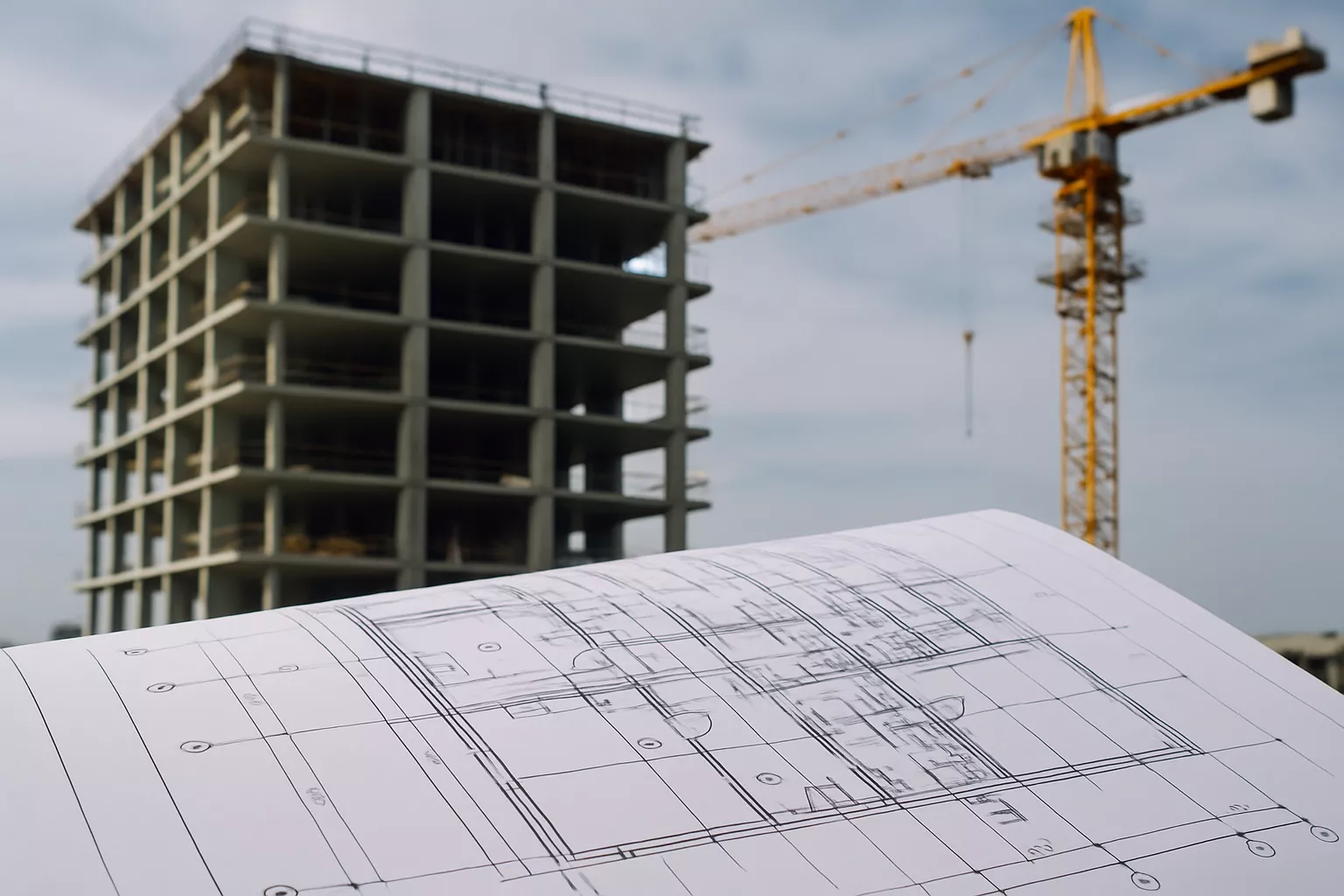
Liability for Defects Identified During the Project Implementation Stage
When defects are identified during the project implementation stage, the key issue becomes determining who is responsible for them. Unlike everyday disputes, where identifying the responsible party is simpler, construction projects involve several participants, each responsible for their own scope of work.
The designer is responsible for the accuracy of the design documentation. Even if the documentation has undergone expert review and received a positive conclusion, this does not exempt the designer from subsequent liability. If errors in calculations, inconsistencies in drawings, or violations of technical regulations are discovered during construction, the designer must revise the documentation and compensate the customer for damages.

Registration of a Foreign Company in Russia and Choice of Tax Regime
A foreign company has decided to enter the Russian market — where to start?
Dozens of business support mechanisms operate in Russia. Corporate income tax incentives, exemption from corporate property tax, government support programs, special conditions for residents of Special Economic Zones (SEZs) (Free Economic Zones (FEZs)) and Territories of Advanced Socio-Economic Development (TASEDs) — all this allows foreign companies to build flexible and effective business models.
What forms of presence are available, what tax regimes can be chosen, and how to enter the Russian market systematically and with a perspective for growth.

Russian Tax Liabilities, Audit Risks, and Criminal Exposure for Foreign-Owned Companies and Directors
Foreign corporations, international investors, and non-resident executives operating subsidiaries or commercial branches in the Russian Federation face heightened scrutiny from the Federal Tax Service (FTS) and enforcement authorities. Russia’s tax administration relies on automated digital monitoring systems—including cross-border transaction tracking and unified tax accounting—making compliance failures costly. Unpaid tax liabilities exceeding RUB 18.75 million trigger mandatory criminal referrals under Article 199 of the Russian Criminal Code, exposing company executives and beneficial owners to personal liability, asset freezing, and criminal prosecution.