Date:
09.10.2026
Reading time:
26 minutes
Author:

Daniil Kadyrov
Managing Partner
Registration of a Foreign Company in Russia and Choice of Tax Regime
Date:
09.10.2026
Reading time:
26 minutes
Article
Introduction Forms of Doing Business by a Foreign Company in Russia Subsidiary Branch Representative Office Permanent Establishment Partnership (Full or Limited Partnership) Individual Entrepreneur Joint Venture Enterprise with Foreign Investment Agent Scheme Table 1. Comparison of the main forms of presence of a foreign company in Russia Taxation Systems for Foreign Companies General Taxation System (GTS) Simplified Taxation System (STS) Tax Incentives for Residents of SEZs and TASEDs Table 2. Comparison of tax regimes for a foreign company Tax Incentives when Doing Business in Special Economic Zones Eastern Regions European Direction Central and Southern Regions Practical Significance Business Structuring and Risks of "Splitting" What is "Business Splitting" Legitimate Business Tax Optimization Conditions for the Legality of a Business Structure Algorithm for a Foreign Company's Entry into the Market of the RF. 1. Determining the Purpose of Presence 2. Company Registration 3. Choice of Tax Regime 4. Registration for Tax Purposes and Organization of Accounting 5. Building a Corporate Structure Practical Recommendations for Beginning CompaniesA foreign company has decided to enter the Russian market — where to start?
Dozens of business support mechanisms operate in Russia. Corporate income tax incentives, exemption from corporate property tax, government support programs, special conditions for residents of Special Economic Zones (SEZs) (Free Economic Zones (FEZs)) and Territories of Advanced Socio-Economic Development (TASEDs) — all this allows foreign companies to build flexible and effective business models.
What forms of presence are available, what tax regimes can be chosen, and how to enter the Russian market systematically and with a perspective for growth.
Forms of Doing Business by a Foreign Company in Russia
When entering the Russian market, a foreign company can choose several forms of presence.
Subsidiary
The most common form is the creation of a subsidiary in the form of a Limited Liability Company (LLC) or a Joint-Stock Company (JSC). This option provides the company with the status of a full-fledged Russian legal entity, makes it possible to apply all tax regimes provided by law, and take advantage of incentives available to residents of SEZs. A subsidiary operates as an independent legal entity and allows the investor to plan long-term business development.
Branch
A branch of a foreign company is directly linked to the parent structure. Its registration follows a simplified procedure compared to the creation of a separate legal entity, but the tax regime here is limited: the branch's activities are taxed according to general rules. This format is used when it is necessary to maintain a link to the head company and ensure direct management.
Representative Office
A representative office differs from a branch in that it is not entitled to engage in commercial activities. Its tasks are reduced to promoting the interests of the foreign business, marketing, negotiations, and customer support. This format is suitable for companies that want to look closely at the market without launching full operational activities.
Permanent Establishment
If a foreign company actually conducts activities on the territory of Russia without registering a subsidiary or a branch, the tax authorities may qualify its activity as a Permanent Establishment (PE). This entails the need to register for tax purposes and pay taxes under the general regime. Unlike a classic representative office, a permanent establishment arises not by the company's application, but by virtue of the nature of its activities.
Partnership (Full or Limited Partnership)
A form rarely used by foreign investors, in which the company participates as a general partner or a contributor (limited partner). It attracts with management flexibility but is associated with a high degree of liability.
Individual Entrepreneur
A foreign individual with a Temporary Residence Permit (TRP) or a Residence Permit (RP) can register in Russia as an Individual Entrepreneur (IE). This is a simplified format for doing business, suitable for small-scale operations, but limited in capabilities for large projects.
Joint Venture
It is created in the form of a Russian LLC or JSC with the participation of a foreign and a Russian partner. This format allows combining local experience and foreign capital, but requires building effective corporate governance. [First time for Joint Venture (JV)]
Enterprise with Foreign Investment
A Russian legal entity in whose capital more than 10% belongs to foreign investors. It is used as a full-fledged legal entity, while taking into account a special status when accessing government support measures.
Agent Scheme
A foreign company can sell goods or services in Russia through a Russian agent or distributor under a contract. This format allows entering the market without registering a legal entity, but it reduces the level of control and may carry the risk of reclassifying relations into a PE if the agent actually acts in the interests of the foreign company on the territory of Russia.
In certain cases, other options for participation are also possible — for example, the implementation of projects through simple partnership agreements (joint activities), concession agreements, or public-private partnership mechanisms. These structures are used less frequently and require separate legal analysis.
Table 1. Comparison of the main forms of presence of a foreign company in Russia
|
Form |
Legal status |
Registration |
Taxation |
Advantages |
Risks/limitations |
|
Subsidiary (LLC/JSC) |
Russian legal entity with a foreign founder |
Federal Tax Service (FTS), standard procedure |
General Taxation System (GTS) / Simplified Taxation System (STS) / incentives for SEZ/TASED residency within GTS/STS |
Reliable and versatile option, access to all regimes |
Requires full corporate formalization and record-keeping |
|
Branch |
Part of a foreign company |
Registration with the FTS, accreditation |
Taxes according to GTS rules |
Control by the parent company, does not require creating a new legal entity |
Difficulties with taxes and licensing, limited incentives |
|
Representative office |
Separate subdivision without the right to do business |
Accreditation with the FTS |
Does not pay taxes on profits, only taxes on employees |
Convenient for marketing, searching for partners |
Cannot conduct commercial activities |
|
Permanent establishment (PE) |
Recognized by the fact of activity |
Registration for tax purposes is required |
Income tax 20%; Value Added Tax (VAT) — for taxable operations |
Opportunity to work without a legal entity |
High tax risks, complex criteria for formation, uncertainty |
|
Partnership (Full/Limited) |
Russian legal entity with the participation of a foreign investor as a general partner or contributor |
FTS, standard procedure |
GTS / STS (subject to conditions) |
Management flexibility, possibility of direct participation of the investor |
High liability of general partners (up to personal liability), rare form for foreign companies |
|
Individual Entrepreneur (IE) |
Foreign individual with a TRP or RP |
FTS, at the place of residence |
GTS / STS (patent system — for citizens of Eurasian Economic Union (EAEU) member states) |
Simplicity of registration, minimal requirements for statutory documents and capital |
Not suitable for large investment projects; the entrepreneur is liable for obligations with all their property |
|
Joint Venture (JV) |
Russian legal entity (usually LLC/JSC) with the participation of a foreign and Russian partner |
FTS, standard procedure |
GTS / STS / incentives for SEZ/TASED residency within GTS/STS |
Access to local markets through a partner, risk sharing |
Dependence on a local partner, possible corporate conflicts |
|
Enterprise with foreign investment |
Russian legal entity in whose capital more than 10% belongs to a foreign investor |
FTS, standard procedure |
GTS / STS / incentives for SEZ/TASED residency within GTS/STS |
Full-fledged Russian legal entity, while taking into account its special status, it can qualify for government support measures |
No separate tax regime is allocated, all obligations and risks are the same as for a regular LLC/JSC |
Taxation Systems for Foreign Companies
After choosing the form of presence, the key issue becomes determining the tax regime. In Russia, there are two basic taxation systems — the general (GTS) and the simplified (STS). For residents of special economic zones and territories of advanced socio-economic development, special conditions are provided in the form of reduced rates and tax incentives within these systems.
General Taxation System (GTS)
This is the basic regime used by most large companies. It involves the payment of income tax at a rate of 20% (3% to the federal budget and 17% to the regional budget, while regions can reduce their part), VAT at a rate of 20% or 10% for certain categories of goods, as well as property tax at a rate of up to 2.2%. GTS is chosen by companies with large turnovers, actively working with imports and exports, where the right to a VAT deduction is important.
Simplified Taxation System (STS)
STS is intended for small and medium-sized businesses and comes in two types:
- "Income" — a rate of 6% of revenue (regions can reduce it to 1%)
- "Income minus expenses" — a rate of 15% of profit (regions can reduce it to 5%).
Application conditions:
- income of no more than 200 million rubles per year;
- number of employees no more than 130 people;
- residual value of fixed assets and Intangible Assets (IA) — up to 150 million rubles.
Companies on STS are not VAT payers (with rare exceptions). This simplifies accounting but can be a disadvantage when working with counterparties. In a number of regions, reduced rates are provided for certain types of activities — focus on the current decisions of your constituent entity of the Russian Federation (RF).
Tax Incentives for Residents of SEZs and TASEDs
Special economic zones and territories of advanced development provide for the use of GTS or STS with additional tax incentives. A Russian legal entity or an individual entrepreneur registered on its territory and having concluded an agreement with the management company can become a resident of an SEZ.
Advantages:
- income tax is reduced to 2–5%;
- exemption from property tax for a period of up to 10 years;
- exemption from transport tax for several years;
- customs benefits — import of goods without payment of duties and VAT when used inside the zone or in production (when goods are released to the rest of the RF, duties and VAT are subject to payment).
It is important to note that incentives are not provided automatically. The company must maintain separate accounting of operations inside and outside the zone, as well as fulfill the established investment obligations.
Table 2. Comparison of tax regimes for a foreign company
|
STS "Income" |
STS "Income minus expenses" |
UAT |
GTS |
|
|
Regular regime |
6 % (possible reduction by the law of the constituent entity of the RF to 1 %) |
15 % (possible reduction by the law of the constituent entity of the RF to 5 %) |
6 % of profit (fixed by the Tax Code of the Russian Federation (TC RF)) [First time for Unified Agricultural Tax (UAT)] |
Income tax 20 % (3 % federal part + 17 % regional part); VAT 20 % (10 % for certain goods); property tax up to 2.2 % |
|
When applying incentives in territories with a special regime (SEZ, TASED, FPV, etc.) |
1 – 3 % (regional STS rates for residents of zones); property and transport incentives 0 % |
5 – 10 % (regional STS rates for residents); property incentives 0 % |
0 – 3 % (depending on the regional law and residency conditions) [First time for Free Port of Vladivostok (FPV)] |
Income tax 0 – 5 % (regional part); property and transport – 0 %; VAT 20 % (with the right to deduction); customs preferences within the zone regime |
Special economic zones, territories of advanced socio-economic development, and the Free Port of Vladivostok are not special tax regimes within the meaning of Article 18 of the TC RF. In such territories, basic systems (GTS, STS, UAT) are applied with reduced rates and incentives in the presence of resident status and fulfillment of investment obligations.
The choice of taxation system depends on the scale of the business and strategic goals. Large companies more often use GTS, small and medium-sized enterprises start with STS, projects with long-term investments consider SEZs and TASEDs. For a foreign investor, the optimal solution is to create a subsidiary, which, depending on development plans, can operate on GTS or STS, and when registering in an SEZ or TASED, such regimes will operate taking into account the incentives provided.
Tax Incentives when Doing Business in Special Economic Zones
Special economic zones and territories of advanced development are a tool of state policy aimed at attracting investment and developing regions. For a foreign company, they can become an entry point to the market with minimal costs.
Unlike standard taxation conditions, incentives for SEZ/TASED residency within GTS/STS are provided to those organizations that implement investment projects under a concluded agreement. They are valid within the period established by law and can be canceled in case of violation of the conditions of the agreement on conducting activities in the zone.
Each zone has its own specialization and regional advantages.
Eastern Regions
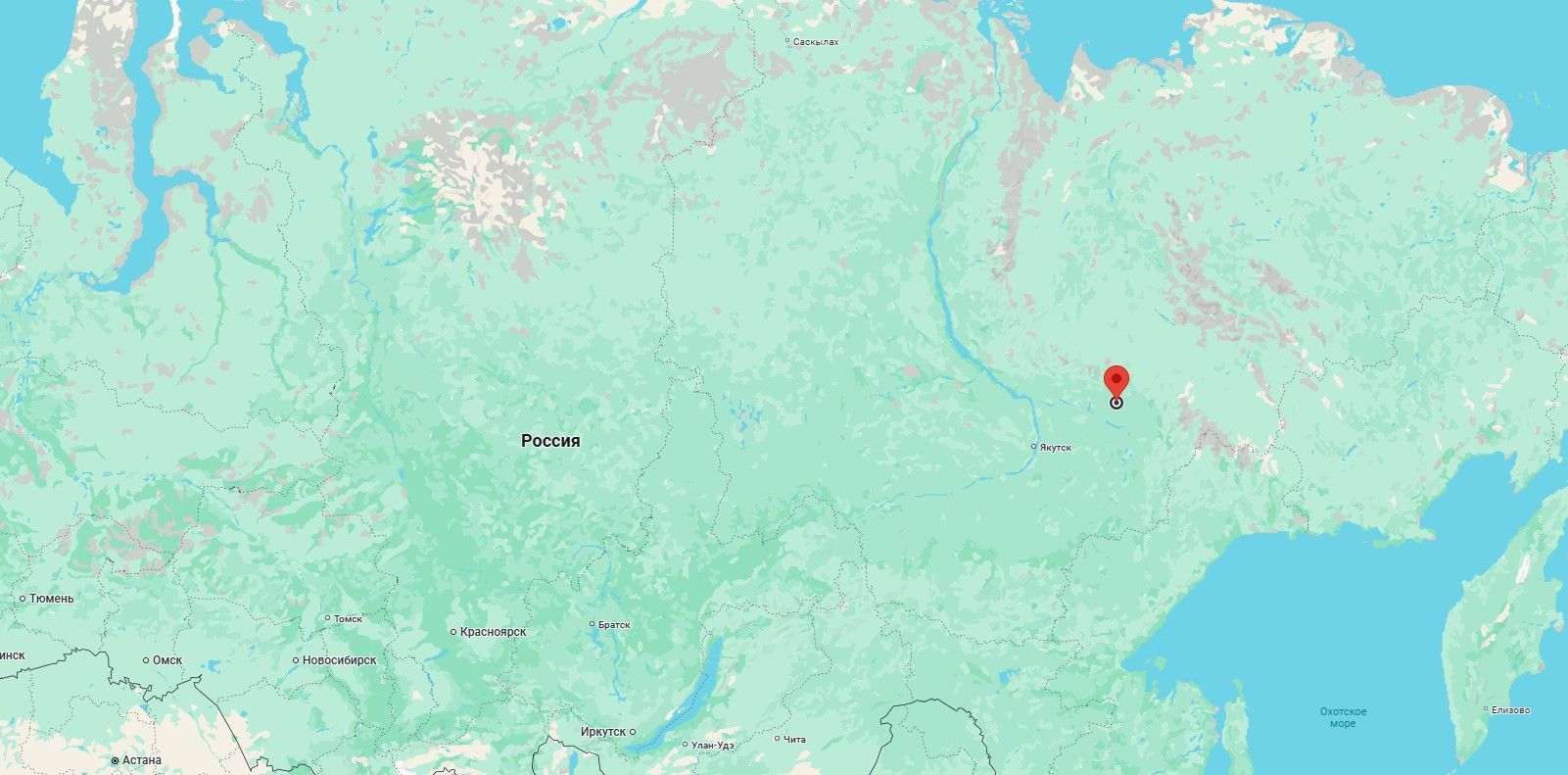
For companies from Asia, the most convenient choice is the Far East, the Free Port of Vladivostok, and TASEDs in large cities of the region. This combines geographical proximity to China, developed port and railway infrastructure, and maximum tax incentives. In a number of cases, the income tax rate is reduced to 4%, and exemption from property and transport taxes is provided for up to 10 years.
European Direction
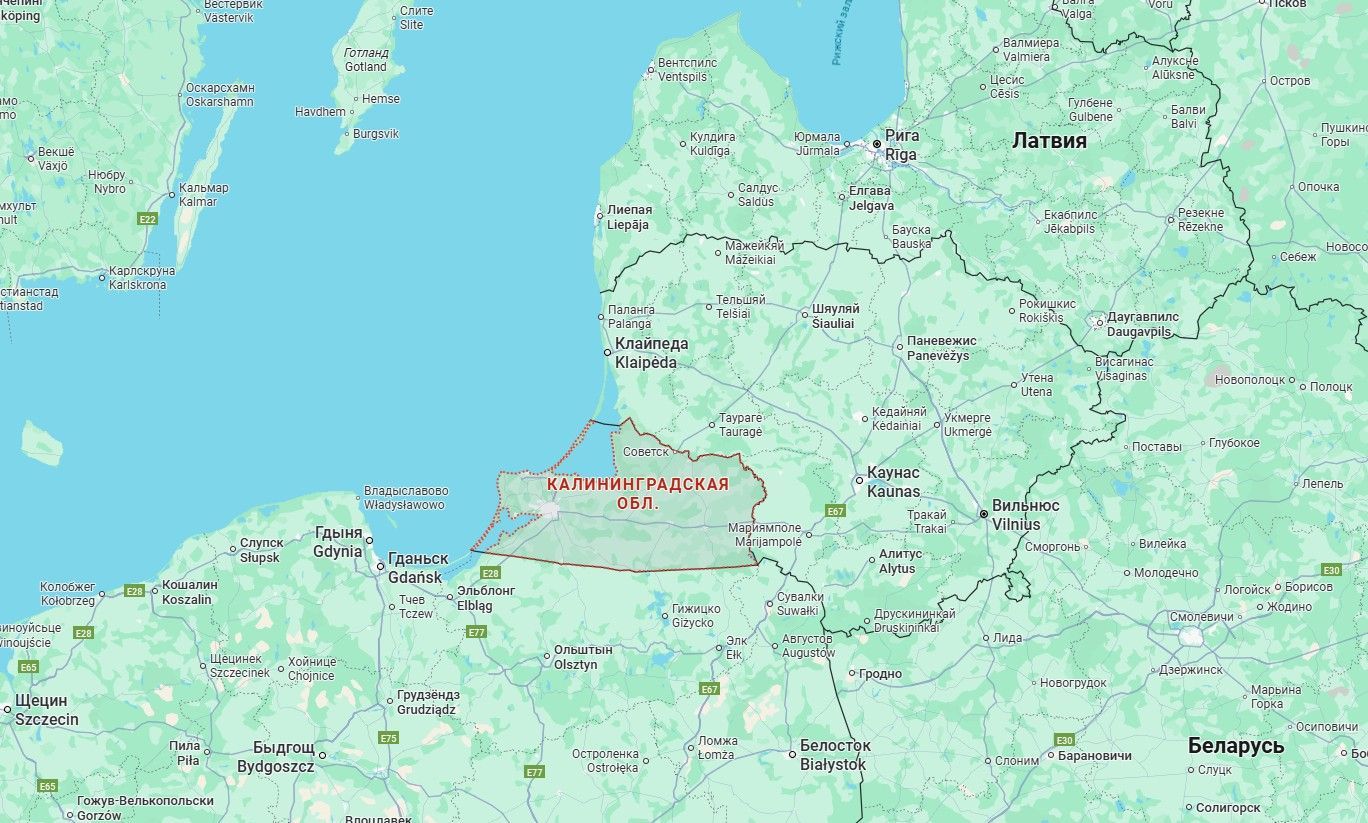
The Kaliningrad Region operates under a separate law on a special economic zone. The region is unique in its location: it provides access to both EAEU markets and European directions. For companies related to trade or re-export, this is an opportunity to work in a regime not available to other constituent entities of the RF.
Central and Southern Regions
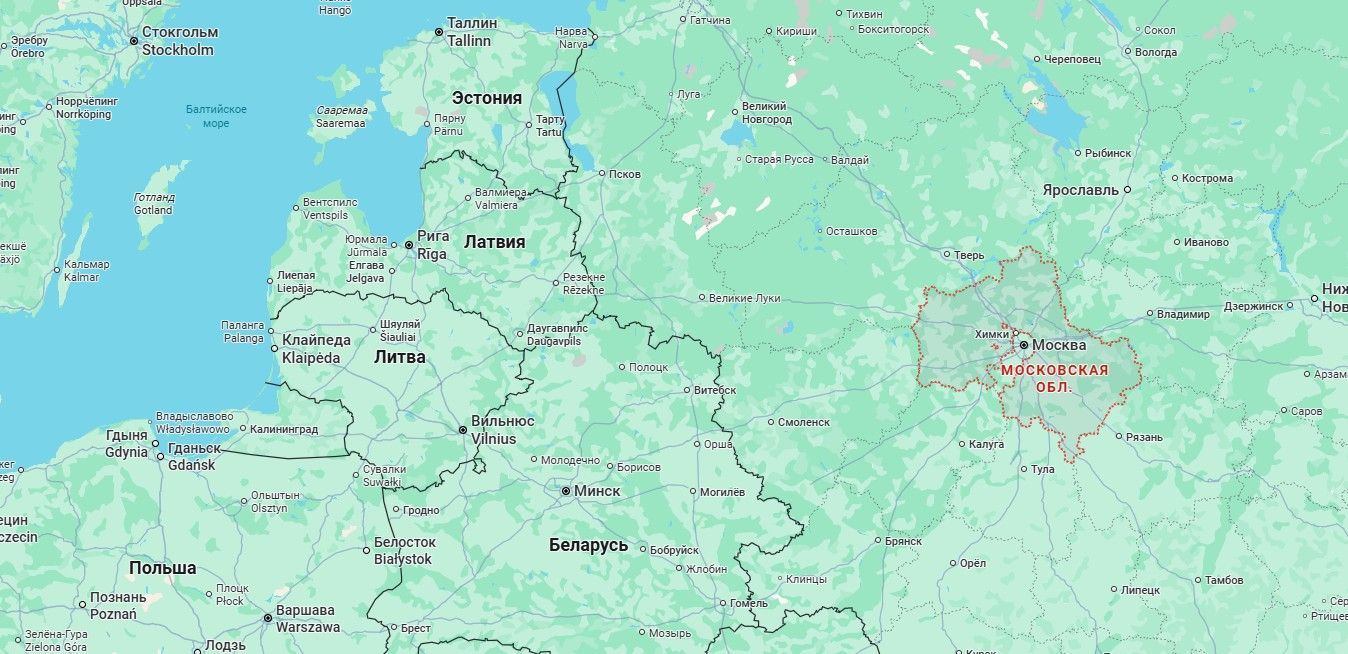
Among the central sites, it is worth highlighting the "Alabuga" SEZ in Tatarstan and "Dubna" in the Moscow Region.
"Alabuga" is considered one of the most successful industrial zones in Russia, offering a developed infrastructure and proximity to the markets of Central Russia.
"Dubna" is focused on high-tech projects and scientific and innovative companies.
In the south of the country, the "Lotos" zone operates in the Astrakhan Region, associated with the development of the "North–South" transport corridor and the shipbuilding industry.
Practical Significance
For a foreign investor, such territories are not only tax reliefs, but also access to industrial clusters with ready-made sites, simplified administrative procedures, and specialized infrastructure. The choice of a specific zone depends on logistics and industry.
Business Structuring and Risks of "Splitting"
When working on the Russian market, foreign companies may think about creating several legal entities to reduce the tax burden. However, here it is important to distinguish between legitimate optimization and so-called "business splitting".
What is "Business Splitting"
Splitting is understood as the artificial division of a single business into several companies in order to apply the simplified taxation system or other incentives that are unavailable with consolidated turnovers. In practice, this is, for example, a situation where several organizations with the same founders and staff trade the same goods from the same warehouse. Tax authorities consider such schemes as obtaining an unjustified tax benefit and assess additional taxes, penalties, and fines.
Legitimate Business Tax Optimization
Instead of a formal division of turnovers, it is worth building a holding structure where each legal entity performs an independent economic function. This can be a division by types of activity, product groups, or regions.
- One company is responsible for trade, another for imports and logistics, and a third for marketing and promotion.
- A division by assortment is possible: for example, separate companies for electronics, clothing, and home goods.
- Regional specialization is permissible: different legal entities for the Far East, Siberia, and Central Russia.
- And so on.
Conditions for the Legality of a Business Structure
In order for tax authorities not to see signs of splitting, each company in the group must possess signs of independence:
- its own staff (even if small);
- separate property or leased space;
- separate accounting and warehouse records;
- its own contracts and external counterparties;
- market prices in mutual transactions, formal tax-wise taking into account transfer pricing rules.
If each unit performs a separate function and conducts independent activities, the risks of claims from the tax authorities are minimal. Legitimate diversification through a holding gives the investor the same flexibility as splitting, but within the legal framework.
Algorithm for a Foreign Company's Entry into the Market of the RF
1. Determining the Purpose of Presence
The first stage is understanding what the company is entering the Russian market for. If the tasks are limited to market analysis and negotiations with partners, a representative office is sufficient. To conduct trade or production, a subsidiary will be required. In cases where it is important to maintain direct management by the head office, a branch can be used.
2. Company Registration
For a subsidiary, the procedure includes registering an LLC or JSC with the tax authorities. A branch and a representative office undergo accreditation with the FTS. If the company plans to work in a special economic zone, registration must be carried out precisely on its territory, followed by the conclusion of an agreement with the management company.
3. Choice of Tax Regime
In practice, small and medium-sized enterprises often start with the simplified system (STS), which allows reducing the burden and simplifying accounting. Large companies choose the general system (GTS). Incentives of special economic zones (SEZ) and territories of advanced socio-economic development (TASED) can be applied under both GTS and STS. In such cases, the basic rules of the chosen system are preserved, but reduced rates for income tax or STS apply, as well as exemption from property and transport taxes.
The choice of the optimal regime depends on the scale of the business, the structure of expenses, the nature of transactions, and the need for tax deductions.
4. Registration for Tax Purposes and Organization of Accounting
After registration, the company is obliged to register for tax purposes. It is important to immediately set up a system of accounting and tax records, especially if activities are conducted simultaneously inside and outside the SEZ. Special attention should be paid to issues of currency control in cross-border settlements and reporting on operations with non-residents.
5. Building a Corporate Structure
At the final stage, the role of each legal entity in the group is determined. It is logical to separate trade, logistics, marketing, and management functions. This approach ensures transparency of operations, helps to avoid claims about "business splitting", and allows building a sustainable model taking into account transfer pricing requirements.
Practical Recommendations for Beginning Companies
For foreign investors planning to open a business in Russia, it is important not only to choose the right form of presence and tax regime, but also from the very beginning to build a system of work that will ensure the sustainability of the project.
Firstly, long-term planning matters. Registering a subsidiary using the STS can be beneficial at the start, but as turnovers grow, the company will inevitably switch to the general system. Therefore, it is advisable to calculate scaling scenarios in advance and evaluate how sustainable the business model is under different tax burdens.
Secondly, attention should be paid to the corporate structure. For foreign groups of companies, an effective solution can be the distribution of functions between several legal entities — trade, logistics, marketing, real estate management. This approach allows reducing operational risks, increasing the transparency of activities, and avoiding claims by tax authorities regarding artificial splitting.
Thirdly, competent compliance is required. Russian tax legislation requires separate accounting when working in special economic zones, as well as the use of market prices in intra-group transactions. Violation of these rules can lead to the loss of incentives and tax assessments.
Finally, when entering the Russian market, it is important to enlist the support of qualified consultants. Correct registration, choice of taxation regime, execution of agreements with management companies, and setting up transfer pricing — all this requires professional support.
KDpartners specialists accompany foreign clients at all stages of entering the Russian market — from choosing an organizational and legal form and tax regime to obtaining the status of an SEZ resident and structuring business taking into account the requirements of Russian legislation.
FAQ
What risks exist for a foreign company when entering the Russian market?
Can a foreign company hire employees in Russia directly?
No, only a Russian legal entity or a branch accredited with the FTS is entitled to conclude employment contracts. A representative office can hire personnel, but exclusively to perform representative functions.
At the same time, a foreign company can work with individuals on the basis of civil law contracts (CLC), for example, service contracts. Such a format does not constitute an employment relationship and is regulated by civil legislation. Read more about the differences between these contracts in our article: Employment Contracts and Civil Law Contracts (CLC).
Can a foreign company conduct cash settlements in Russia?
Does a foreign company need to open a current account in a Russian bank?
How long does it take to register a foreign company in Russia?
What taxes does a foreign company pay in Russia through a subsidiary?
Can a foreign company use tax incentives in SEZs and TASEDs?
What is a permanent establishment of a foreign company in Russia?
How does a branch of a foreign company in Russia differ from its representative office?
What taxation system can a foreign company choose in Russia?

Key Terms
F
Foreign Element
F
Formal Reciprocity
P
Principle of Non-Discrimination
Related articles
All articles
Registration of a Foreign Company in Russia and Choice of Tax Regime
A foreign company has decided to enter the Russian market — where to start?
Dozens of business support mechanisms operate in Russia. Corporate income tax incentives, exemption from corporate property tax, government support programs, special conditions for residents of Special Economic Zones (SEZs) (Free Economic Zones (FEZs)) and Territories of Advanced Socio-Economic Development (TASEDs) — all this allows foreign companies to build flexible and effective business models.
What forms of presence are available, what tax regimes can be chosen, and how to enter the Russian market systematically and with a perspective for growth.

Russia-China Cross-Border Corporate Structures: Navigating the New Sanctions Compliance Landscape
As international sanctions pressure continues to intensify, businesses operating within the Russia-China corridor are forced to develop adaptive corporate models. Today, we observe a significant convergence in how Russian and Chinese enterprises structure their operations. The primary objective has shifted from standard corporate optimization to a dual challenge: maintaining effective operational control over assets while mitigating the severe risks of secondary sanctions.

Reporting on Controlled Foreign Companies and the Importance of Reliable Service Providers
Entrepreneurs often remember the obligation to inform the state about their foreign activities only close to the deadline. In such situations, the risk of making mistakes is high, especially when service providers turn out to be unreliable.
Contact us
Leave a request and our lawyers will contact you as soon as possible to provide a free consultation on your issue.
