International commercial disputes
International commercial disputes require consideration of jurisdiction, applicable law and the mechanism for executing decisions. KDpartners specialists provide comprehensive support for arbitrations and court proceedings involving foreign counterparties.
Contact us
Leave a request and our lawyers will contact you shortly to provide a consultation on your issue.
Why Choose Us?
20+
Jurisdictions
800+
Satisfied Clients
Long-term Results
Our expert legal strategies streamline business processes and ensure desirable outcomes, even in complex litigation cases
Unique Legal Solutions for Every Jurisdiction
Our deep international expertise allows us to offer customized solutions beyond standard legal service packages
Industry Expertise & Recognition
Our specialists publish in leading legal journals, shaping industry trends and reinforcing their authority in the legal field
Collaboration with Market Leaders
We work with major corporations and key market players
46 years
Of Combined Experience

FAQ
Is it possible to enter into an arbitration agreement after a dispute has arisen?
What if the arbitration award is made in a country that is not a party to the New York Convention?
Is it possible to simultaneously file a claim in arbitration and in state court?
What needs to be done to protect interests?
Recommended:
-
it is necessary to formulate an arbitration and legal clause;
-
determine the place of fulfillment of obligations;
-
identify the location of the counterparty's assets;
-
provide for security measures and a procedure for exchanging documents.
Is it possible to challenge an arbitration award if it seems unfair?
How to choose a suitable arbitration institution to resolve a dispute?
What to do if a foreign counterparty evades enforcement of a court decision?
Can mediation be used to resolve an international commercial dispute?

Related articles
All articles

Liability for Defects Identified During the Project Implementation Stage
When defects are identified during the project implementation stage, the key issue becomes determining who is responsible for them. Unlike everyday disputes, where identifying the responsible party is simpler, construction projects involve several participants, each responsible for their own scope of work.
The designer is responsible for the accuracy of the design documentation. Even if the documentation has undergone expert review and received a positive conclusion, this does not exempt the designer from subsequent liability. If errors in calculations, inconsistencies in drawings, or violations of technical regulations are discovered during construction, the designer must revise the documentation and compensate the customer for damages.
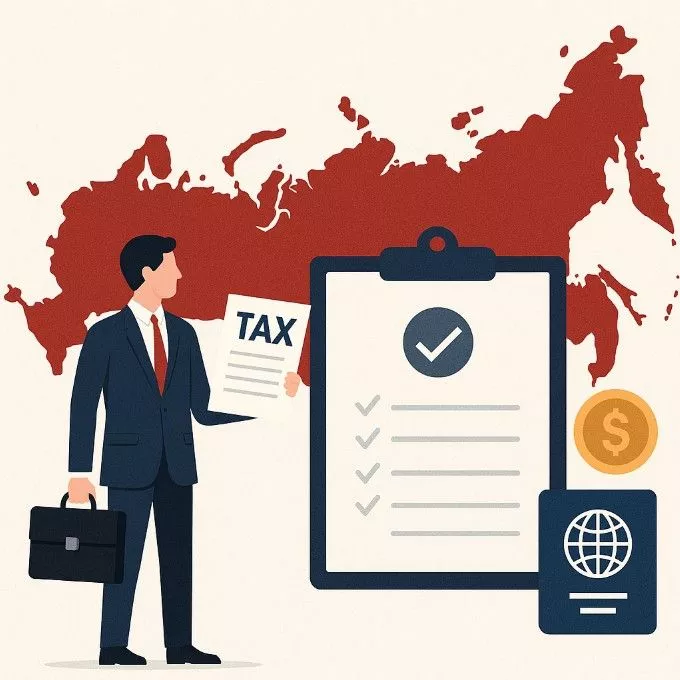
Registration of a Foreign Company in Russia and Choice of Tax Regime
A foreign company has decided to enter the Russian market — where to start?
Dozens of business support mechanisms operate in Russia. Corporate income tax incentives, exemption from corporate property tax, government support programs, special conditions for residents of Special Economic Zones (SEZs) (Free Economic Zones (FEZs)) and Territories of Advanced Socio-Economic Development (TASEDs) — all this allows foreign companies to build flexible and effective business models.
What forms of presence are available, what tax regimes can be chosen, and how to enter the Russian market systematically and with a perspective for growth.

Russian Tax Liabilities, Audit Risks, and Criminal Exposure for Foreign-Owned Companies and Directors
Foreign corporations, international investors, and non-resident executives operating subsidiaries or commercial branches in the Russian Federation face heightened scrutiny from the Federal Tax Service (FTS) and enforcement authorities. Russia’s tax administration relies on automated digital monitoring systems—including cross-border transaction tracking and unified tax accounting—making compliance failures costly. Unpaid tax liabilities exceeding RUB 18.75 million trigger mandatory criminal referrals under Article 199 of the Russian Criminal Code, exposing company executives and beneficial owners to personal liability, asset freezing, and criminal prosecution.