Compensation for damage, losses to legal entities
Compensation for harm and losses to legal entities covers a set of legal actions to protect the property interests of business. The service includes legal analysis of the situation, assessment of real damage and lost profits, collection of evidence, preparation of claims and lawsuits, negotiation and representation in court.
Contact us
Leave a request and our lawyers will contact you shortly to provide a consultation on your issue.
More about our services
- The right of a legal entity to compensation for losses and damage
- Legal grounds for compensation of losses
- Classification of losses
- Typical grounds for losses
- Indemnification procedure
- Features of proving losses
The right of a legal entity to compensation for losses and damage
Violation of contractual obligations by the counterparty, actions of third parties, dissemination of defamatory information, illegal acts of state authorities – all this can lead to real damage, lost profits and other economic consequences for the company.
Russian legislation provides legal entities with the right to demand full compensation for losses caused. This right is enshrined in Article 15 of the Civil Code of the Russian Federation, according to which the person whose actions are imputed to violate someone else's right is obliged to compensate the injured party for both real damage and lost profits. In this case, it does not matter whether the losses arose within the framework of contractual relations or as a result of a non-contractual offense.
Legal grounds for compensation of losses
The basis for the recovery of losses from the tortfeasor is the norms of civil legislation governing both contractual and non-contractual (tort) liability. First of all, Articles 15 and 16 of the Civil Code of the Russian Federation are subject to application.
Article 15 of the Civil Code of the Russian Federation formulates a general rule on compensation for damages. According to this norm, a person whose unlawful action caused damage to another person is obliged to compensate the victim:
-
real damage is the costs that a person has incurred or should incur to restore the violated right;
-
lost profit is income that a person could have received under normal conditions of civil circulation if his right had not been violated.
Article 16 of the Civil Code of the Russian Federation extends the rule on compensation for losses to cases where damage was caused as a result of illegal actions (or inaction) of state bodies or their officials.
-
in case of suspension of the company's activities based on the results of an illegal inspection;
-
in case of refusal to register rights;
-
when issuing acts that were subsequently declared invalid.
Additionally, the following are used:
-
Articles 393 and 393.1 of the Civil Code of the Russian Federation – establish liability for violation of obligations under the contract;
-
Articles 1064 and 1068 of the Civil Code of the Russian Federation – regulate the general provisions on tort liability, including liability for the actions of employees;
-
Article 1100 of the Civil Code of the Russian Federation indicates cases when damage is compensated regardless of fault (for example, in the field of activities associated with increased danger).
Although, of course, these are not all the norms governing this type of relationship. If we are talking about legal relations with a foreign element, foreign law may be applicable.
Classification of losses
In the context of legal practice, losses are understood not only as actually incurred damage, but also as lost income to which the organization would have been entitled in the normal course of events. In accordance with Article 15 of the Civil Code of the Russian Federation, losses are divided into two main types:
1. Actual damage
The actual damage is the actual losses that the legal entity has already suffered. It includes:
-
direct costs caused by the need to eliminate the consequences of the offense;
-
loss of or damage to property;
-
costs of fulfilling obligations to third parties resulting from violations;
-
additional costs incurred in connection with the unfair behavior of the counterparty.
Example: the counterparty did not deliver the paid goods on time, as a result of which the company was forced to urgently purchase similar goods at a higher price.
2. Lost profits
Lost profit is income that a legal entity could have received if its right had not been violated. Unlike the actual damage, it is not about costs incurred, but about unrealized opportunities.
To recover lost profits, it is necessary to prove:
-
the likelihood of making a profit;
-
that these profits were not obtained solely due to the defendant's misconduct;
-
The amount of this profit can be reasonably calculated.
Example: due to the failure of the project due to the fault of the contractor, the company lost a contract with a third party, which implied a stable income throughout the year.
Typical grounds for losses
Compensation for losses to a legal entity is possible if there are certain legal grounds. Depending on the nature of the offense, they can arise both within the framework of contractual relations and outside them (on the basis of non-contractual liability).
1. Breach of Contractual Obligations
This is one of the most common sources of losses. Classic examples:
-
delay in the performance of an obligation (for example, delivery of goods);
-
non-fulfillment or improper fulfillment of the terms of the contract;
-
unilateral refusal to perform without legal grounds.
Such actions may entail direct financial losses, failure to meet obligations to other counterparties, the need to urgently replace the supplier and other losses.
2. Causing damage outside the framework of the contract (tort liability)
Examples:
-
damage to property by a third party;
-
dissemination of false and defamatory information about the company;
-
infringement of exclusive rights (for example, to a trademark);
-
unfair competition.
In all these cases, the person who violated the law is obliged to compensate for the damage caused.
3. Actions (or inaction) of state bodies and their officials
A legal entity has the right to compensation for losses if they have arisen as a result of:
-
issuance of an illegal normative act;
-
conducting an illegal inspection;
-
refusal of state registration;
-
other illegal actions on the part of state bodies recognized by the court as invalid.
The presence of a judicial act confirming the illegality of such actions is the basis for filing a claim for damages.
Indemnification procedure
The mechanism for compensating losses to a legal entity may include both a pre-trial procedure and recourse to the court. The effectiveness of recovery directly depends on the correct legal qualification of the situation, the completeness of the evidence base and compliance with the established procedures.
1. Legal and factual analysis of the situation
Initially, a legal assessment of the grounds for filing claims is carried out. Installed:
-
the nature of the offense (contractual or tort);
-
the presence of a connection between the actions of the offender and the consequences that have occurred;
-
the possibility and expediency of recovering damages.
At this stage, it is necessary to calculate the amount of the potential claim, including both actual damage and lost profits.
2. Documentation and calculation of losses
It is necessary to collect:
-
contracts and correspondence with counterparties;
-
invoices, payment orders, waybills;
-
expert opinions on the market value of losses;
-
other supporting documents, including internal reporting.
The calculation should be transparent and verifiable.
3. Complaint procedure
In many cases, the law and the terms of the contract require compliance with the pre-trial procedure. The injured party sends a claim to the violator outlining the essence of the violations, calculating losses and demanding their voluntary compensation.
Failure to comply with the claim procedure may result in a refusal to accept the claim or leave it without consideration.
4. Trial
If the dispute cannot be settled amicably, the affected company files a lawsuit in the arbitration court. In the course of the proceedings, it is necessary:
-
substantiate the violation;
-
confirm the causal relationship;
-
to prove the amount of damages.
The court may order a forensic examination and request additional documents.
5. Execution of the court decision
At the end of the process, if the claim is satisfied, a writ of execution is issued, on the basis of which it is possible:
-
forced collection of funds through the bailiff service;
-
foreclosure on the debtor's assets;
-
other measures within the framework of enforcement proceedings.
Features of proving losses
The key condition for satisfying a claim for damages is the availability of proper evidence. In accordance with the provisions of the Civil Procedure and Arbitration Procedure Codes, the burden of proof lies with the plaintiff, that is, with the legal entity filing the claim for compensation.
To recover damages, three mandatory elements must be proved:
1. The fact of violation
The plaintiff must confirm that the actions of the defendant were contrary to the law, the terms of the contract or generally accepted rules of conduct in civil turnover. The following can be used as evidence:
-
treaties and annexes thereto;
-
correspondence of the parties;
-
acts, decisions or inaction of state bodies;
-
other documents recording the fact of violation.
2. Amount of losses
The amount required for reimbursement must be justified and documented. Depending on the situation, the evidentiary array may include:
-
financial documents (invoices, acts, bills);
-
internal documents (business plans, reports, calculations);
-
opinions of appraisers and economic experts.
Losses cannot be arbitrary or hypothetical.
3. Cause-and-effect relationship
The plaintiff is obliged to show that there is a direct and legally significant connection between the actions of the defendant and the losses incurred. In other words, the losses must be a direct consequence of the defendant's unlawful conduct, and not the result of other circumstances.
If the losses could have been caused by other reasons (e.g. market fluctuations, actions of third parties), it is necessary to exclude such versions or show that they did not have a decisive effect.
Successful cases
Examples of legal solutions tailored to the specifics of the request, industry and jurisdiction.
Violation of the terms of delivery
Situation
The client, a Russian manufacturing company, entered into a contract for the supply of equipment, and the supplier violated the deadlines, which led to the failure of the contract with a third party.
Our solution
We prepared a claim, calculated both the real damage (the cost of renting replacement equipment) and the lost profit (profit not received due to the failure of the project). The case was referred to arbitration.
Result
The court satisfied the client's claims in full. The total amount of compensation amounted to more than 3 million rubles, including legal costs and interest for the use of other people's funds.
Failure of an IT project due to the fault of contractors
Situation
The contractors of the outsourcing company made a long delay, did not provide the sources and refused to return part of the payment. This led to the failure of internal deadlines and the loss of the contract for technical support with another partner.
Our solution
Specialists collected evidence of non-fulfillment of obligations, prepared a calculation of losses and sent a claim. After the refusal of the outsourcing company, a lawsuit was filed. The court appointed an examination, which confirmed the guilt of the performer.
Result
The company recovered the cost of the unfinished part of the work, the cost of attracting a new team. The amount of compensation is 900,000 rubles.
Compensation for Losses under the Contract of Carriage
Situation
A distributor of household appliances entered into an agreement with a carrier, under which a batch of goods was partially damaged during transportation. The amount of losses was about 900,000 rubles. The carrier referred to force majeure circumstances and refused to compensate for the damage.
Our solution
Specialists recorded the damage during acceptance, prepared an independent appraiser's opinion, prepared a pre-trial claim with a full calculation of losses and a reference to the provisions of the contract and transportation legislation. In the process of negotiations, the lawyers managed to convince the carrier of the unprofitability of the trial.
Result
The parties entered into an agreement on compensation for damages. The client received compensation in the amount of 750,000 rubles within 30 days.
Damage to goods in the warehouse of the logistics operator
Situation
Due to the violation of the temperature regime, some of the products were unsuitable for sale, and the goods were not insured.
Our solution
They recorded the damage, ordered an independent examination and sent a claim with a calculation of the actual damage attached. The defendant refused to compensate for losses voluntarily, so the case was transferred to court.
Result
The court found the operator guilty and ordered him to pay the client 1.1 million rubles in damages.
Why Choose Us?
20+
Jurisdictions
800+
Satisfied Clients
Long-term Results
Our expert legal strategies streamline business processes and ensure desirable outcomes, even in complex litigation cases
Unique Legal Solutions for Every Jurisdiction
Our deep international expertise allows us to offer customized solutions beyond standard legal service packages
Industry Expertise & Recognition
Our specialists publish in leading legal journals, shaping industry trends and reinforcing their authority in the legal field
Collaboration with Market Leaders
We work with major corporations and key market players
46 years
Of Combined Experience

FAQ
Is it possible to recover damages without a concluded contract?
What is considered admissible evidence of lost profits?
Who conducts the examination of losses and can it be challenged?
What are the statutes of limitations for such disputes?
Is it possible to recover damages from a state body without recognizing its actions as illegal?
Are legal costs reimbursed separately from losses?
Is it possible to determine in advance the procedure for compensation of losses in the contract?

Related articles
All articles
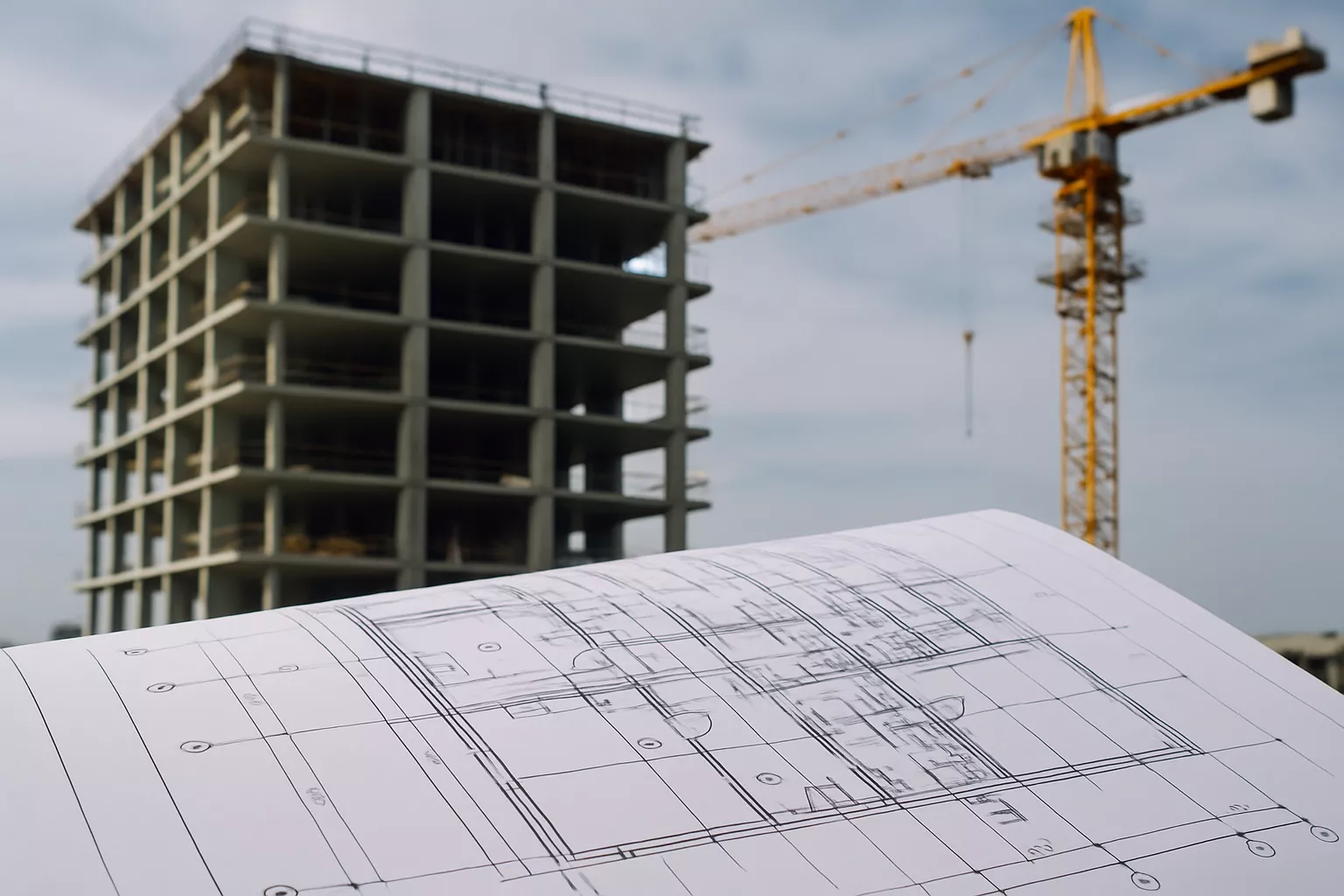
Liability for Defects Identified During the Project Implementation Stage
When defects are identified during the project implementation stage, the key issue becomes determining who is responsible for them. Unlike everyday disputes, where identifying the responsible party is simpler, construction projects involve several participants, each responsible for their own scope of work.
The designer is responsible for the accuracy of the design documentation. Even if the documentation has undergone expert review and received a positive conclusion, this does not exempt the designer from subsequent liability. If errors in calculations, inconsistencies in drawings, or violations of technical regulations are discovered during construction, the designer must revise the documentation and compensate the customer for damages.

Violation of Deadlines and Phasing of Design Works
In accordance with the Civil Code of the Russian Federation, the condition on deadlines for performing design works is mandatory: the contract must specify the start date, the final date, and intermediate stages.
The Urban Planning Code of the Russian Federation establishes the staged nature of preparation of design documentation and the mandatory nature of its expert review.
In state and municipal contracts, deadlines are always classified as essential terms; their modification is possible only in cases expressly provided for by Federal Law No. 44-Federal Law and Federal Law No. 223-Federal Law.
Who bears liability for violation of deadlines and what consequences await the parties to the contract are examined in this article.
