Date:
18.11.2026
Reading time:
7 minutes
Author:

Daniil Kadyrov
Managing Partner
Legal Aspects of Incorporating a Business Abroad
Date:
18.11.2026
Reading time:
7 minutes

Article
Introduction Corporate Structures and Liability Regimes Governance Bodies and Director Residency Mandates Economic Substance and Regulatory Compliance Anti-Money Laundering and Beneficial Ownership Verification Cross-Border Tax Control and Information Exchange Asset Protection and Dispute Resolution Frameworks Comparative Legal Parameters Across Key Jurisdictions Navigating Legal and Regulatory Risks in Cross-Border ExpansionExpanding commercial operations into international markets requires adapting to rigorous regulatory transparency, cross-border fiscal oversight, and multi-jurisdictional compliance frameworks. Establishing a foreign legal entity has evolved from a routine administrative registration task into a complex legal undertaking that demands aligning local corporate rules with international law and the tax residency obligations of the beneficial owner.
Corporate Structures and Liability Regimes
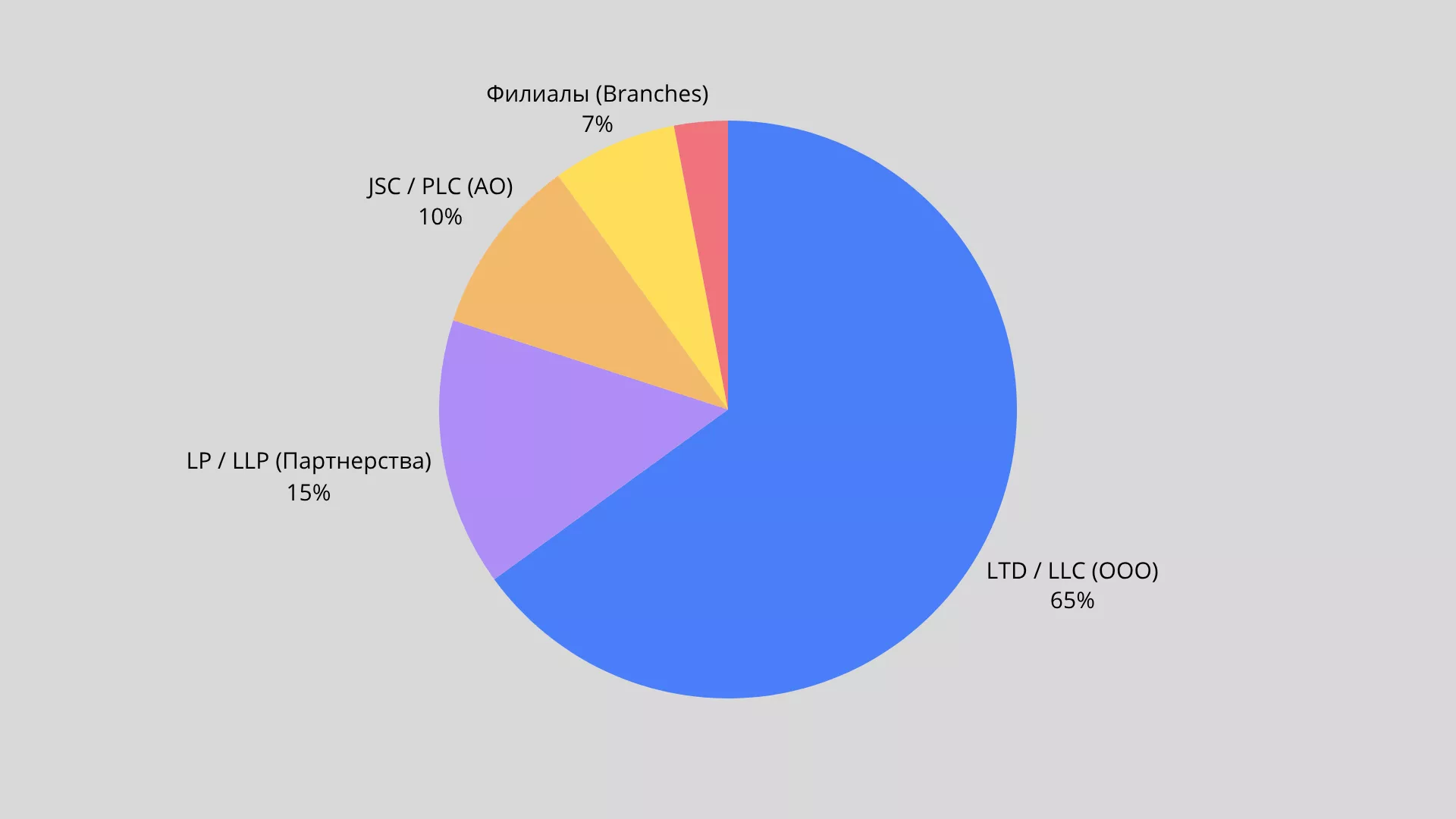
Selecting an appropriate legal form determines shareholder liability thresholds, capital-raising capabilities, and internal governance flexibility. Common international vehicles include private limited companies (LTD, LLC), joint-stock corporations (JSC, PLC), and partnerships (LP, LLP). Limited liability confines an owner's financial exposure to contributed capital, whereas general partnerships impose unlimited liability on managing partners.
- choosing corporate forms, establishing liability boundaries, and managing capital flexibility;
- differentiating between subsidiary entities possessing independent legal personality and branch offices creating direct parent company liability;
- regulating share distribution and voting rights through shareholder agreements and statutory bylaws;
- implementing mechanisms for deadlock resolution, pre-emptive rights, and equity transfer restrictions;
- managing foreign ownership caps through joint ventures or local nominee arrangements where mandated by national law.
Governance Bodies and Director Residency Mandates
Corporate regulations across major international financial centers enforce strict operational requirements on governance composition. Prestigious jurisdictions frequently require at least one director to maintain local tax residency to substantiate that management and control occur within the place of incorporation rather than remotely.
- verifying executive qualifications and confirming the absence of economic crime convictions or directorship bans;
- appointing local corporate secretaries responsible for statutory registers and regulatory filings;
- enforcing fiduciary duties, making directors personally liable for corporate insolvency under wrongful trading doctrines;
- formalizing executive powers through board resolutions, power of attorney instruments, and apostilled authorizations.
Economic Substance and Regulatory Compliance
Modern international corporate law prohibits paper-thin booking entities lacking genuine operational connections to their jurisdiction of incorporation. Tax authorities and banking compliance departments evaluate economic substance during annual audits and ongoing monitoring cycles.
- maintaining physical commercial office space backed by long-term leases rather than virtual mail drops;
- employing qualified local staff authorized to execute core operational decisions locally;
- routing office maintenance expenses and executive salaries through local bank accounts;
- maintaining the legal standard of "Mind and Management" where strategic board deliberations occur physically within the jurisdiction.
Anti-Money Laundering and Beneficial Ownership Verification
Foreign entity formation and maintenance require rigorous adherence to Anti-Money Laundering (AML) and Know Your Customer (KYC) standards. Regulatory frameworks mandate identifying Ultimate Beneficial Owners (UBOs) holding equity stakes exceeding statutory thresholds, typically set at 25% or lowered to 10% in high-risk sectors.
- collecting passport identity records and verified proof of address documentation from all UBOs;
- authenticating capital origins through Source of Wealth (SoW) and Source of Funds (SoF) declarations;
- registering beneficial ownership data in centralized public or restricted government registries;
- screening corporate entities and principals against global watchlists, including OFAC, EU, and UK sanctions lists.
Cross-Border Tax Control and Information Exchange
Foreign corporate operations intersect directly with home-country tax rules through automatic information exchange protocols and Controlled Foreign Corporation (CFC) legislation. Financial institutions transmit non-resident account balances and investment earnings annually under the Common Reporting Standard (CRS).
- applying Controlled Foreign Corporation rules to tax undistributed foreign earnings at the shareholder level;
- utilizing bilateral Double Taxation Treaties (DTT) to eliminate multi-layered tax burdens based on beneficial ownership status;
- complying with Transfer Pricing regulations by enforcing arm’s length pricing principles on intra-group transactions.
Asset Protection and Dispute Resolution Frameworks
Securing international commercial assets requires separating property rights and establishing multi-layered holding structures. Registering intellectual property rights through international treaties protects intangible assets from localized litigation risks.
- executing intellectual property holding structures and licensing agreements across foreign jurisdictions;
- incorporating arbitration clauses into commercial contracts to direct disputes to specialized institutions like LCIA, SCC, or SIAC;
- utilizing discretionary trusts and private foundations to separate beneficial ownership from operational exposure.
Comparative Legal Parameters Across Key Jurisdictions
|
Legal Parameter |
European Union (e.g., Cyprus, Estonia) |
Middle East (e.g., UAE, Qatar) |
Southeast Asia (e.g., Singapore, Hong Kong) |
Offshore Zones (e.g., BVI, Seychelles) |
|
beneficial ownership registry |
public registers complying with EU directives |
partially open or accessible via official request |
closed registers accessible to regulatory authorities |
confidential closed registers |
|
substance requirements |
high physical office and local staffing mandates |
moderate requirements tied to license types |
mandatory local registered office and management |
formal statutory criteria for specific sectors |
|
director residency |
encouraged but not universally mandatory |
mandatory for local corporate vehicles |
minimum of one resident director required |
not legally required |
|
document legalization |
apostille certification under Hague Convention |
consular legalization required in most cases |
apostille or consular verification |
apostille certification |
|
tax control framework |
full automated data exchange via CRS |
automatic data exchange via CRS |
automatic data exchange via CRS |
limited or selective information sharing |
Navigating Legal and Regulatory Risks in Cross-Border Expansion
Successfully establishing and maintaining a foreign corporate structure requires balancing operational agility with strict regulatory compliance. Primary legal risks center on satisfying substance mandates, fulfilling home-country reporting obligations, and passing institutional banking reviews. Overlooking these requirements exposes enterprises to tax penalties, account freezes, and administrative dissolution.
Engaging specialized legal counsel during the structural design phase ensures correct documentation, multi-jurisdictional compliance, and long-term asset security. To review your international expansion strategy and secure professional legal support, contact our corporate advisory team.
FAQ
How are shareholder disputes resolved in foreign corporate structures?
How is intellectual property structured when expanding a business abroad?
What is the difference between apostille certification and consular legalization?
How does the Common Reporting Standard (CRS) operate for corporate entities?
What obligations arise for a foreign business owner under Controlled Foreign Corporation (CFC) rules?

Key Terms
A
Affiliated Person (Affiliate)
A
Arbitration Clause
B
Beneficiary (Beneficial Owner)
C
Controlled Foreign Company (CFC)
C
Corporate Transparency Act (CTA)
F
Fiduciary Duty / Fiduciary Liability
F
FinCEN (Financial Crimes Enforcement Network)
K
Know Your Customer (KYC)
L
Legal & Financial Due Diligence
N
Nominee Director
O
OFAC (Office of Foreign Assets Control)
S
SDN List (Specially Designated Nationals)
Related articles
All articles

Guide to Registering a Business in the UAE for International Entrepreneurs
Establishing a commercial presence in the United Arab Emirates requires navigating a regulatory environment defined by structural distinctions between mainland authorities and free economic zones, stringent corporate tax rules, and enhanced banking compliance standards. For international entrepreneurs and Russian founders, launching a project demands precise alignment with federal transparency mandates, economic substance requirements, and bilateral reporting frameworks.

Legal Requirements and Registration Procedures for Foreign Businesses in Russia
Establishing a commercial enterprise or regional presence by foreign investors in Russia requires navigating a multi-layered regulatory framework. Compliance spans corporate law, state anti-money laundering mandates, migration controls, and ongoing currency regulations. Understanding these prerequisites allows international investors to minimize regulatory refusal risks during interactions with the Federal Tax Service (FTS) and institutional authorities.
Legal Aspects of Incorporating a Business Abroad
Expanding commercial operations into international markets requires adapting to rigorous regulatory transparency, cross-border fiscal oversight, and multi-jurisdictional compliance frameworks. Establishing a foreign legal entity has evolved from a routine administrative registration task into a complex legal undertaking that demands aligning local corporate rules with international law and the tax residency obligations of the beneficial owner.
Contact us
Leave a request and our lawyers will contact you as soon as possible to provide a free consultation on your issue.
