Date:
18.11.2026
Reading time:
11 minutes
Author:

Daniil Kadyrov
Managing Partner
Guide to Registering a Business in the UAE for International Entrepreneurs
Date:
18.11.2026
Reading time:
11 minutes

Article
Introduction 7-Stage Project Launch Roadmap Jurisdictions and Corporate Structures License Classifications and Permitted Business Activities Office Infrastructure and Physical Presence Requirements Residency and Integration Frameworks for Russian Nationals Taxation and Financial Reporting Standards Corporate Banking and Compliance Operations Comparative Overview of UAE Jurisdictions Navigating Regulatory and Corporate Structuring RisksEstablishing a commercial presence in the United Arab Emirates requires navigating a regulatory environment defined by structural distinctions between mainland authorities and free economic zones, stringent corporate tax rules, and enhanced banking compliance standards. For international entrepreneurs and Russian founders, launching a project demands precise alignment with federal transparency mandates, economic substance requirements, and bilateral reporting frameworks.
7-Stage Project Launch Roadmap
Executing a commercial enterprise in the United Arab Emirates requires sequential completion of core administrative steps:
- selecting a jurisdiction between mainland and free zones based on operational geography and domestic market access requirements;
- reserving a trade name through the Department of Economic Development or the respective free zone administration;
- drafting foundational corporate documents, including memorandum of association documents and incorporation resolutions;
- securing the business license by settling government fees and administrative registration charges;
- completing investor visa formalities, medical examinations, and securing the Emirates ID card;
- executing office space lease agreements and registering premises within the Ejari or free zone property registries;
- registering with the Federal Tax Authority to secure tax identification numbers and fulfill banking compliance prerequisites.
Jurisdictions and Corporate Structures
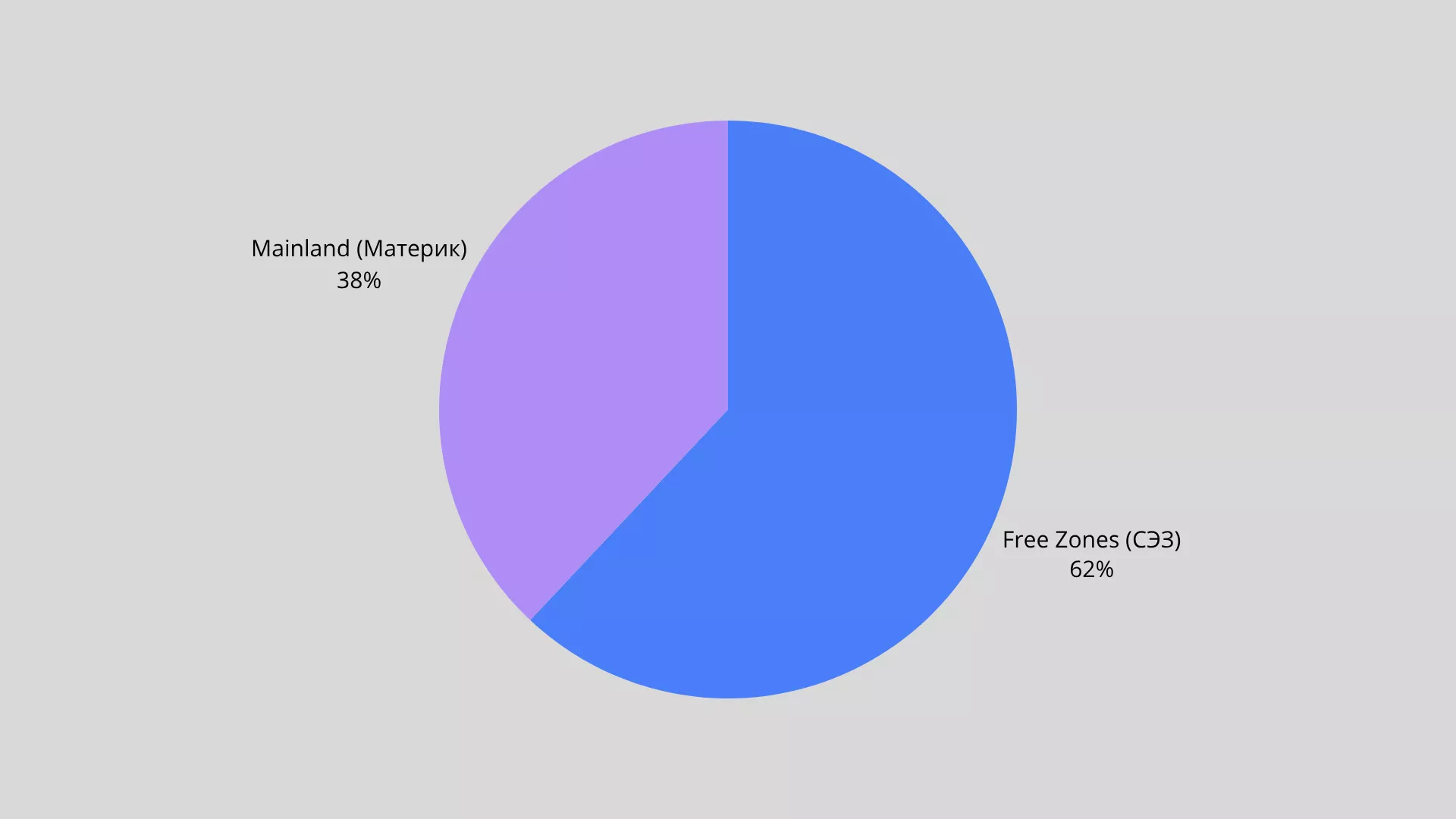
The legal framework of the United Arab Emirates divides commercial territory into mainland jurisdictions and free economic zones, dictating tax treatments, workforce capacities, and local market access rights. Mainland entities are registered through the Department of Economic Development of a specific emirate, granting full 100% foreign ownership rights for most commercial and industrial activities without requiring a local partner. Mainland structures permit direct domestic trading and participation in public sector procurement, though they require physical office rentals and strict adherence to federal standards.
Free economic zones operate as autonomous enclaves governed by independent regulators, specializing in sectors such as technology, commodities trading, logistics, or media. Free zone structures allow complete capital control and zero corporate tax benefits upon fulfilling qualifying income criteria, but they restrict direct sales or service delivery into the domestic mainland market unless operating through a local distributor or agent. For Russian founders, jurisdictions such as RAKEZ and Meydan Free Zone remain highly demanded due to streamlined compliance verifications and flexible capital requirements.
License Classifications and Permitted Business Activities
Commercial operations in the United Arab Emirates require an active license that governs authorized corporate activities, utilizing classification systems harmonized with international standards. Trade licenses cover import, export, and distribution activities, whereas professional service licenses govern intellectual, consulting, or technical work. Industrial licenses regulate manufacturing and processing operations, complemented by specialized sectoral approvals.
Activities can be combined under composite licenses, though commercial and professional services often require separate regulatory clearances. Regulated sectors including healthcare, education, and financial services require pre-approvals from specialized federal ministries prior to license issuance. E-commerce permits enable digital marketplace operations subject to compliant warehousing or authorized logistics operators, while general trading licenses allow broad multi-commodity handling without itemized product listings, excluding restricted goods.
Office Infrastructure and Physical Presence Requirements
Maintaining an active business license requires a registered physical address, with infrastructure standards directly impacting resident visa allocations. Mainland entities mandate physical office leases registered within property verification systems such as Ejari in Dubai or Tawtheeq in Abu Dhabi, maintaining standard space ratios per visa quota.
Free economic zones provide scalable workspace options tailored to startups and expanding enterprises:
- flexi-desk solutions offering shared co-working spaces sufficient for foundational licensing and minimal visa quotas;
- dedicated desks providing fixed workstations to enhance corporate banking compliance credibility;
- executive offices delivering private workspace premises that unlock expanded visa allocations based on floor area metrics.
Banking compliance protocols favor physical offices over minimal virtual desks to satisfy substance criteria. Enterprises managing physical goods must maintain certified warehouses compliant with municipal and civil defense regulations.
Residency and Integration Frameworks for Russian Nationals
Securing resident status in the United Arab Emirates is essential for long-term management, banking control, and tax optimization. Russian founders primarily utilize investor visas tied to corporate equity ownership, issued for renewable two-year terms. Capital investments or property acquisitions meeting high-value thresholds qualify applicants for 10-year Golden Visas, eliminating mandatory six-month re-entry rules and easing family sponsorships.
Residency acquisition requires structured local administrative procedures:
- securing entry permits and establishing immigration establishment card files;
- undergoing medical fitness screenings, including blood testing and chest radiography;
- completing biometric data capture for identity documentation;
- obtaining physical Emirates ID cards required for municipal services and lease agreements.
Establishing tax residency requires physical presence exceeding 90 days annually alongside a verified center of economic interests, yielding tax residency certificates recognized by foreign tax authorities. Immigration procedures utilize automated digital platforms, processing within standard timeframes.
Taxation and Financial Reporting Standards
The tax framework of the United Arab Emirates enforces mandatory administrative oversight across all business tiers, unifying compliance standards for mainland and free zone entities alike. A 9% corporate tax rate applies to taxable profits exceeding AED 375,000, while free zone entities may claim a 0% rate on qualifying income provided they maintain economic substance and satisfy annual audit obligations.
Value Added Tax operates at a 5% baseline rate, with mandatory registration triggered upon crossing the AED 375,000 revenue threshold within a 12-month period. Financial reporting mandates require external audits for qualifying free zone persons and mainland corporations exceeding high-revenue turnovers, alongside a seven-year digital archiving requirement for all transactional records. Corporate tax returns must be filed within nine months of fiscal year-end, and non-compliance risks heavy administrative penalties and loss of tax exemptions.
Corporate Banking and Compliance Operations
Navigating corporate bank account opening requires rigorous adherence to enhanced due diligence protocols, particularly for entities involving Russian beneficiaries. Compliance assessments examine the lawful origin of wealth and operational funds through historical bank statements, asset sales contracts, or dividend distributions.
UAE banks enforce strict operational prerequisites for corporate applicants:
- mandatory physical presence of shareholders and authorized account signatories within the country;
- active resident visas and valid Emirates ID cards for primary signatories;
- verified physical office leases demonstrating operational substance;
- comprehensive business plans detailing counterparties, projected turnovers, and transaction geographies.
Processing timelines extend up to several months as banks cross-reference data against international financial standards and automated tax information exchange protocols. Neobanks offer accelerated onboarding options with transactional limitations.
Comparative Overview of UAE Jurisdictions
|
Comparison Parameter |
Mainland |
Free Zone |
|
operational geography |
unrestricted throughout the United Arab Emirates |
within the designated zone and international markets |
|
equity ownership |
100% foreign ownership permitted for most commercial codes |
100% foreign ownership |
|
office requirements |
mandatory physical commercial lease registration |
flexible co-working spaces or dedicated facilities |
|
corporate tax regime |
9% rate applied above profit thresholds |
0% or 9% depending on qualifying income status |
|
workforce staffing |
scalable based on verified physical floor space |
restricted by designated free zone visa quotas |
|
customs duties |
standard import duties applied |
zero tariffs within zone limits or re-export operations |
Navigating Regulatory and Corporate Structuring Risks
Establishing an enterprise in the United Arab Emirates requires careful synchronization across corporate structuring, tax reporting, and banking compliance. Proactive preparation of financial histories and operational substance mitigates structural vulnerabilities. To evaluate optimal jurisdictional placement or secure professional legal support during corporate incorporation, contact our advisory team.
FAQ
What is the minimum capital requirement for company registration in the United Arab Emirates?
Do free zone licenses grant direct retail trading rights across Dubai and Abu Dhabi?
Can an enterprise open a UAE bank account while holding a tourist visa?
Do Russian citizens forfeit home-country tax residency when launching a business in the UAE?

Key Terms
A
Articles of Association (Charters / Bylaws)
A
Authorized Capital
B
Beneficiary (Beneficial Owner)
C
Controlled Foreign Company (CFC)
L
Legal & Financial Due Diligence
L
Legal Address
R
Redomiciliation
S
SDN List (Specially Designated Nationals)
Related articles
All articles
Guide to Registering a Business in the UAE for International Entrepreneurs
Establishing a commercial presence in the United Arab Emirates requires navigating a regulatory environment defined by structural distinctions between mainland authorities and free economic zones, stringent corporate tax rules, and enhanced banking compliance standards. For international entrepreneurs and Russian founders, launching a project demands precise alignment with federal transparency mandates, economic substance requirements, and bilateral reporting frameworks.

Legal Requirements and Registration Procedures for Foreign Businesses in Russia
Establishing a commercial enterprise or regional presence by foreign investors in Russia requires navigating a multi-layered regulatory framework. Compliance spans corporate law, state anti-money laundering mandates, migration controls, and ongoing currency regulations. Understanding these prerequisites allows international investors to minimize regulatory refusal risks during interactions with the Federal Tax Service (FTS) and institutional authorities.

Legal Aspects of Incorporating a Business Abroad
Expanding commercial operations into international markets requires adapting to rigorous regulatory transparency, cross-border fiscal oversight, and multi-jurisdictional compliance frameworks. Establishing a foreign legal entity has evolved from a routine administrative registration task into a complex legal undertaking that demands aligning local corporate rules with international law and the tax residency obligations of the beneficial owner.
Contact us
Leave a request and our lawyers will contact you as soon as possible to provide a free consultation on your issue.
